


Introduction
Dubai’s skyline is defined by height, and height creates a plumbing challenge that many building owners underestimate — water pressure increases dramatically as it travels down through a tall structure. A properly specified Pressure Reducing Valve is what stands between that pressure and the pipework, fixtures, and appliances that were never designed to handle it. Without one, buildings face a slow but expensive cycle of leaks, damaged fittings, and premature equipment failure. Sensor Tech supplies pressure reducing valves engineered for exactly this kind of demanding, high-rise application.

The Problem with Uncontrolled Water Pressure
In a tall building, water pressure builds up at lower floors simply due to gravity acting on the column of water above. Left uncontrolled, this excess pressure can cause pipe joints to weaken over time, valves and taps to fail early, water heaters and appliances to wear out faster than expected, and, in more serious cases, sudden pipe bursts that lead to costly water damage. These are not rare, isolated problems — they are a predictable outcome of high-pressure water systems that were never fitted with proper pressure control.
How a Pressure Reducing Valve Protects the System
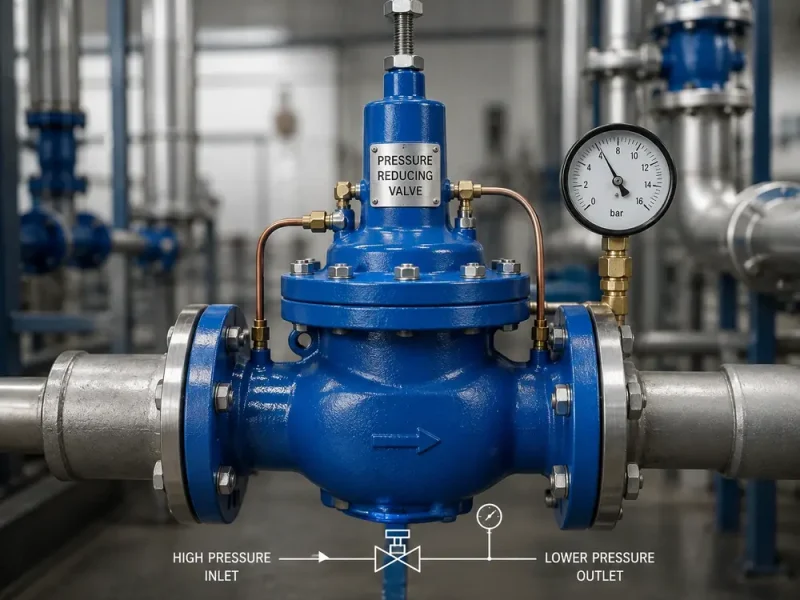
A pressure reducing valve installs directly on the water line and lowers high inlet pressure down to a safe, consistent outlet pressure before it reaches the rest of the building’s plumbing. This single component delivers several practical benefits:
- Maintains safe and consistent water pressure throughout the pipeline network
- Protects pumps, fittings, and appliances from damage caused by pressure spikes
- Ensures steady, predictable water distribution across every floor and outlet
- Allows pressure settings to be adjusted to match the specific needs of the system
- Reduces long-term maintenance costs by preventing pressure-related wear
Where Pressure Reducing Valves Are Needed Most
Residential towers, commercial high-rises, and mixed-use developments across Dubai all benefit from properly installed pressure reducing valves, particularly on the lower floors where static pressure is at its highest. Sensor Tech’s P25 FWIC model, for example, is built for residential and commercial water systems that require frequent management of sediment and debris alongside pressure control, with a 1-inch connection size and a 300-psi pressure rating suited to demanding building applications. Facilities with older plumbing infrastructure or a history of recurring leaks are especially good candidates for a pressure audit to check whether current pressure control is adequate.
Compliance and Standards to Look For
When specifying a pressure reducing valve for a project in the UAE, it is important to confirm that the product meets local and international safety and plumbing standards. This protects both the building’s occupants and the long-term performance of the installed system. Sensor Tech’s pressure reducing valves are engineered to meet these requirements, giving consultants and contractors a product, they can specify with confidence during design and approval stages.
Installation and Long-Term Maintenance
Correct installation matters just as much as correct product selection. A pressure reducing valve needs to be installed at the right point in the system, set to the correct outlet pressure for that building’s requirements, and checked periodically to confirm it is still performing within range. Sensor Tech provides installation guidance, ongoing upkeep, and repair services for the valves it supplies, helping ensure that pressure control continues to work as intended long after the original installation date. Skipping this ongoing check is one of the most common reasons buildings experience pressure-related plumbing failures years after a valve was first installed.
Related Blog – A Complete Guide to Pressure Reducing Valves and Their Functioning
Signs Your Building May Need a Pressure Assessment
Many facility managers only think about pressure control after a problem has already appeared, but a few early warning signs are worth watching for. Frequent dripping or leaking taps and joints, unusually loud banging noises in the pipework when water is shut off quickly, appliances that seem to fail earlier than expected, and visible water hammer at fixtures can all point to excess system pressure. If any of these signs sound familiar, it is worth having a qualified team assess whether the building’s pressure reducing valve is correctly sized, correctly set, or even present at all. Older buildings that were constructed before pressure control became standard practice are particularly worth reviewing.

Conclusion
High water pressure is one of the most overlooked risks in Dubai’s high-rise buildings, quietly wearing down pipework and fittings until a failure finally forces attention. A correctly specified and maintained pressure reducing valve prevents that slow damage before it starts, protecting both the building’s infrastructure and its occupants. Sensor Tech supplies pressure reducing valves built to recognized standards, along with the installation and maintenance support needed to keep them performing reliably. Contact Sensor Tech today to discuss pressure control solutions for your building.