


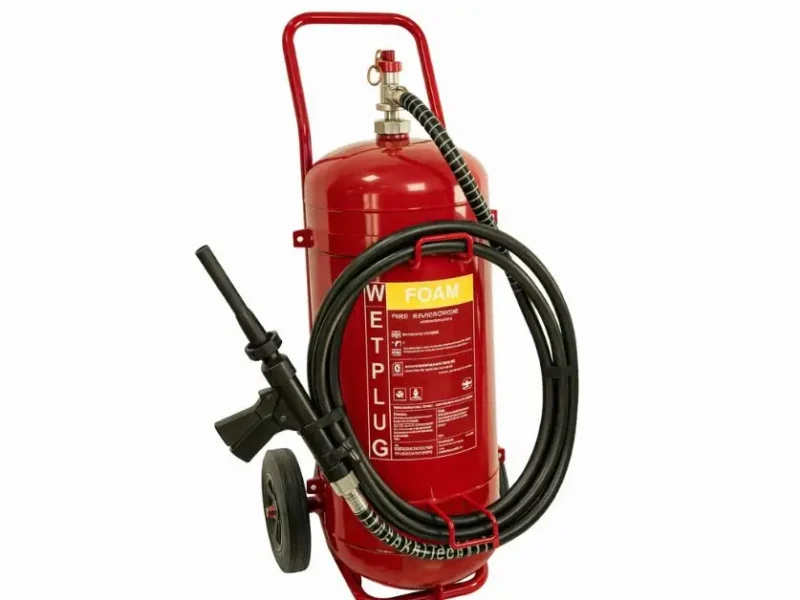
When it comes to protecting your home or office, the right fire safety equipment can make all the difference. Fire Extinguishers are often the first and most effective line of defense during a small outbreak of fire. But how do you choose the right one? The key to that is understanding the kind of fire risks you face and matching them with the correct extinguisher type. This article will walk you through everything you need to know to make an informed choice.

Understand Fire Classes and Extinguisher Types
Fires are categorized based on their fuel source: solids, such as paper or wood; liquids, such as paint or petrol; gases; cooking oils; or electrical equipment.
Since different fuels ignite and burn differently, not all extinguishers can tackle all types of fires. That is why there are several kinds of fire extinguishers, each designed for different fire classes.
Here are the most common extinguisher types and what they’re suitable for:
- Water Extinguishers: Most effective on Class A fires involving ordinary solid combustibles such as wood, paper, or cloth. They work by cooling the combustible material. Not effective on electrical fires or flammable liquids.
- Foam Extinguishers: Effective for both Class A (solids) and Class B fires (flammable liquids). The foam blankets the fuel, cutting off oxygen. Should not be used on electrical fires.
- ABC Dry Powder Extinguishers: General-purpose and versatile extinguishers that handle Class A (solids), Class B (liquids), Class C (gases), and many electrical fires, provided the voltage is below a certain threshold. Because of these properties, they are mostly popular in homes and offices.
- Carbon Dioxide (CO₂) Extinguishers: Effective against Class B fires-involving flammable liquids-and electrical fires. It works by displacing oxygen and smothering the fire without leaving any residue, making it very effective in offices with electronic equipment.
- Wet Chemical Extinguishers: For kitchen fires involving fats and oils, Class F/K. They create a foamy layer over the burning oil, cooling and thereby smothering the fire. Useful where cooking or grease hazards exist.
Matching Extinguishers to Your Environment
For Homes
Homes usually have a combination of combustible materials, electrical appliances, and occasionally places for cooking; therefore, a single extinguisher will hardly suffice. Common advice: retain an ABC Dry Powder extinguisher as the main one, since it is versatile and covers most risks. For kitchens or places with electrical equipment, add a CO₂ extinguisher.
For Offices
The offices will typically have papers, fabrics (furniture), electrical equipment, and, in some instances, flammable materials and cleaning chemicals. A combination of ABC Dry Powder for general combustibles and CO₂ for electrical fires ensures a broader safety coverage can be attained.
For kitchens (home or commercial)
Since cooking oils and fats have different burn patterns — that in many cases are highly intense — it’s best to use Wet Chemical extinguishers in kitchen areas. Note: Conventional water, foam, or powder extinguishers may be ineffective or even dangerous in grease/oil fires.
Practical Tips Before You Buy
- Assess fire hazards: Identify the type of materials present and where a fire could occur, such as paper, electronics, liquids, and cooking oil.
- More than one extinguisher may be helpful to: One multi-purpose unit plus one specialized extinguisher (such as CO₂ or Wet Chemical) provides better coverage, especially in homes or offices with varied risks.
- Check the size and capacity: Fire extinguishers come in different sizes, so make sure the one you purchase will be enough for your space. Larger rooms may necessitate higher-capacity units.
- Maintenance matters: Even the best extinguisher fails if not maintained. Make sure check-ups, pressure gauge inspections, and refills are done on time.
Suggested Read – Why Every Home and Office in Dubai Needs a Fire Extinguisher
Supplier Benefit – Industry-Grade Safety
For business entities, especially those in industrial or commercial fields, fire safety equipment sourced from a trusted supplier offers added reliability. For example, Sensor Tech is one of the leading suppliers of FWIC Valves & WETPLUG products in the Middle East and abroad. Their reputation emphasizes how important it is to source fire safety gear from reputable suppliers for either offices, warehouses, or factories.
If these are for a commercial office, a factory, or even an industrial building, consider sourcing them through reliable brands like Sensor Tech or other similar vendors that ensure that safety standards are met and can withstand diverse conditions.

Conclusion
The selection of the appropriate Fire Extinguisher for your residence or office is not just about buying the first available unit; rather, it is about matching the extinguisher type with the kinds of fire risks you may face. Whether it involves simple paper-and-wood fires, electrical mishaps, or kitchen grease fires, the proper extinguisher can make all the difference between a minor incident and a major disaster. While ABC dry powder extinguishers offer broad protection, adding CO₂ or Wet Chemical extinguishers, depending on your environment, will ensure comprehensive safety. And when it comes to procuring equipment for offices or industrial use, going through a reliable supplier like Sensor Tech provides quality, compliance, and peace of mind. Fire safety isn’t optional; it’s a must.