



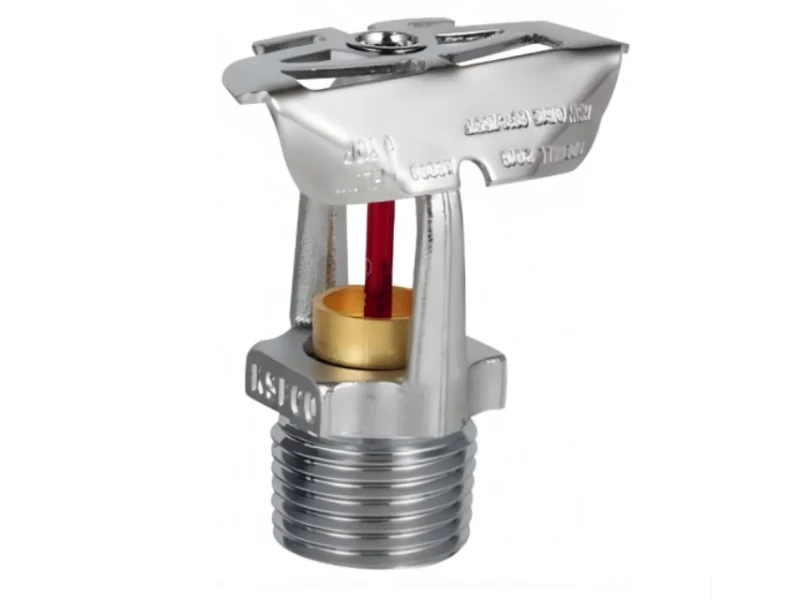
Modern buildings, be it residential, commercial, industrial, or others, are critical in fire protection. Fire sprinkler systems are one of the most dependable safety measures installed in fire incidents, and they automatically detect and contain fire without spreading. In most areas, such as the Middle East, building codes highly encourage or enforce these systems to provide greater life safety and safeguard property. Increased demand for fire sprinklers UAE has been triggered by the rapid growth in infrastructure and enhanced safety standards.
A fire sprinkler system refers to an active fire protection system, which is linked to a water supply line, the sprinkler head of which releases water automatically when a fire triggers the sprinkler head heater. The applications of these systems are common in offices, shopping malls, warehouses, hotels, and residential buildings, as they assist in controlling or putting out fire within a few seconds and minimizing damage.
The widely used types of fire sprinkler systems in buildings are listed below.

1. Wet Pipe Fire Sprinkler System
A wet pipe sprinkler system is the most standard and general type of fire sprinkler system. In this system, water is always available in the pipes and is available to be released instantly once the sprinkler head senses any heat caused by fire.
A heat-sensitive device is fitted inside the sprinkler head, and when the temperature in the area reaches a certain amount, the heat-sensitive part breaks, and water is released directly into the fire. The response time is extremely rapid since the pipes already have water, thus making it very effective in controlling fires during the initial stages.
The wet pipe systems are installed in:
- Office buildings
- Shopping malls
- Residential complexes
- Hotels and schools
Advantages:
- Clean and simple design and maintenance.
- Immediate water discharge
- Reliable and cost-effective
Wet pipe systems are believed to be the normal choice of fire sprinkler in most buildings because of these advantages.
2. Dry Pipe Fire Sprinkler System
A dry pipe sprinkler system will be used in an environment where the temperatures can drop below freezing. As opposed to wet pipe systems, pipes in a dry system are not filled with water, but pressurized air or nitrogen.
Once a sprinkler head is activated due to a fire, the compressed air will flow out first, and this will enable the opening of the valve to allow water to flow in the piping system. The water, in turn, comes out via the sprinkler head that is turned on in order to suppress the fire.
Dry pipe systems are normally applied in:
- Parking garages
- Cold storage facilities
- Warehouses
- Unheated buildings
Advantages:
- Stops the freezing of water in the pipes.
- Appropriate for cold temperatures.
- Reduces risk of pipe damage
This can, however, be a slight lag in water discharge compared to people who use wet pipes, since the air has to be set free first before it can release water.
3. Pre-Action Fire Sprinkler System
Pre-action sprinklers are systems that have characteristics of both the wet and dry pipe systems. Such systems have pipes with air, and water is stagnant behind a special valve. The valve itself opens up only when a fire detector system, e.g., a smoke detector or heat detector, is activated.
When the detection system detects a fire, the pipes are filled with water. These sprinkler heads will subsequently discharge water only when it is hot enough.
This activation procedure occurs in two steps to ensure that there is no accidental discharge of water that may cause destruction of delicate equipment or precious materials.
Pre-action systems are usually employed in:
- Data centers
- Museums
- Libraries
- Archives and server rooms
Advantages:
- Minimizes the possibility of accidental release of water.
- Offers a shield to delicate apparatus.
- Gives it an extra safety margin.
These systems are suitable in places where the damage from water should be reduced due to the level of complexity and reliability.
4. Deluge Fire Sprinkler System
The deluge sprinkler systems are used in highly dangerous areas where fire can spread quickly. The sprinkler heads in this system are all open, and water is supplemented by a special valve.
Once the valve is triggered by a fire detection system, the water will rush through the piping and spurt out on all the sprinkler heads, filling the whole area that is covered.
The deluge systems are normally applied in:
- Chemical plants
- Aircraft hangars
- Power plants
- Flammable liquid industrial plants.
Advantages:
- Quick suppression of fires in large territories.
- Successful in risky situations.
- Containment suppresses the rapid development of fire.
Due to their great response, deluge systems are not common in residential buildings but mostly in specialized industrial settings.
Also Read – How Fire Sprinklers Integrate with Fire Alarm Systems?
Importance of Fire Sprinkler Systems in Modern Buildings
Fire sprinkler systems are an important factor in averting the occurrence of great fire disasters. Structures that have sprinkler systems suffer a much lower fire loss and better security for occupants. These systems assist in the management of fire at the initial stage of development, thereby giving the individuals more time to evacuate the premises, as well as enabling the emergency rescue teams to deal with the facility better.
The advanced fire protection systems are demanded in the rapidly developing countries, where stringent building safety rules are implemented, like in the UAE. With the increasing infrastructure, Fire Sprinklers UAE is a solution that must be depended on to provide security in residential towers and commercial complexes, as well as industrial facilities.
Such companies as Sensor Tech are known as the suppliers of FWIC Valves and WETPLUG products that are leading in the Middle East and abroad, which help to support fire protection systems with the help of high-quality products that increase reliability and performance of the systems.

Conclusion
Fire sprinkler systems are considered the best means of ensuring that buildings and people are not at risk of fire. Wet pipe, dry pipe, pre-action, and deluge systems are the four main types that are tailored to specific needs in each environment and safety. The systems have their own benefits based on the type of building and the level of fire risk.
With the construction and development of the infrastructure gaining momentum in the region, the need to install effective fire protection systems cannot be overemphasized. The growth in the use of fire sprinklers in the UAE points to the importance attached to safety and adherence to the international standards of fire safety in the region. FWIC Valves and WETPLUG products will give building owners and contractors a reliable choice of fire protection solutions in projects within the Middle East and elsewhere, since they can rely upon trusted suppliers such as Sensor Tech.